
Creation, Relationship, and the Grace We Are Made to Share
Trinity Sunday
Genesis 1:1–5, 26–28, 31; 2:1–3
Psalm 8b — VU p. 732
2 Corinthians 13:11–13
Matthew 28:16–20
To bear the image of God is not to dominate creation, but to live in relationship, creativity, care, and mutual responsibility. From the first leaf to the Great Commission, scripture calls us into a web of grace, love, communion, and tending.
What We Hold In Our Hands
1. The Leaf
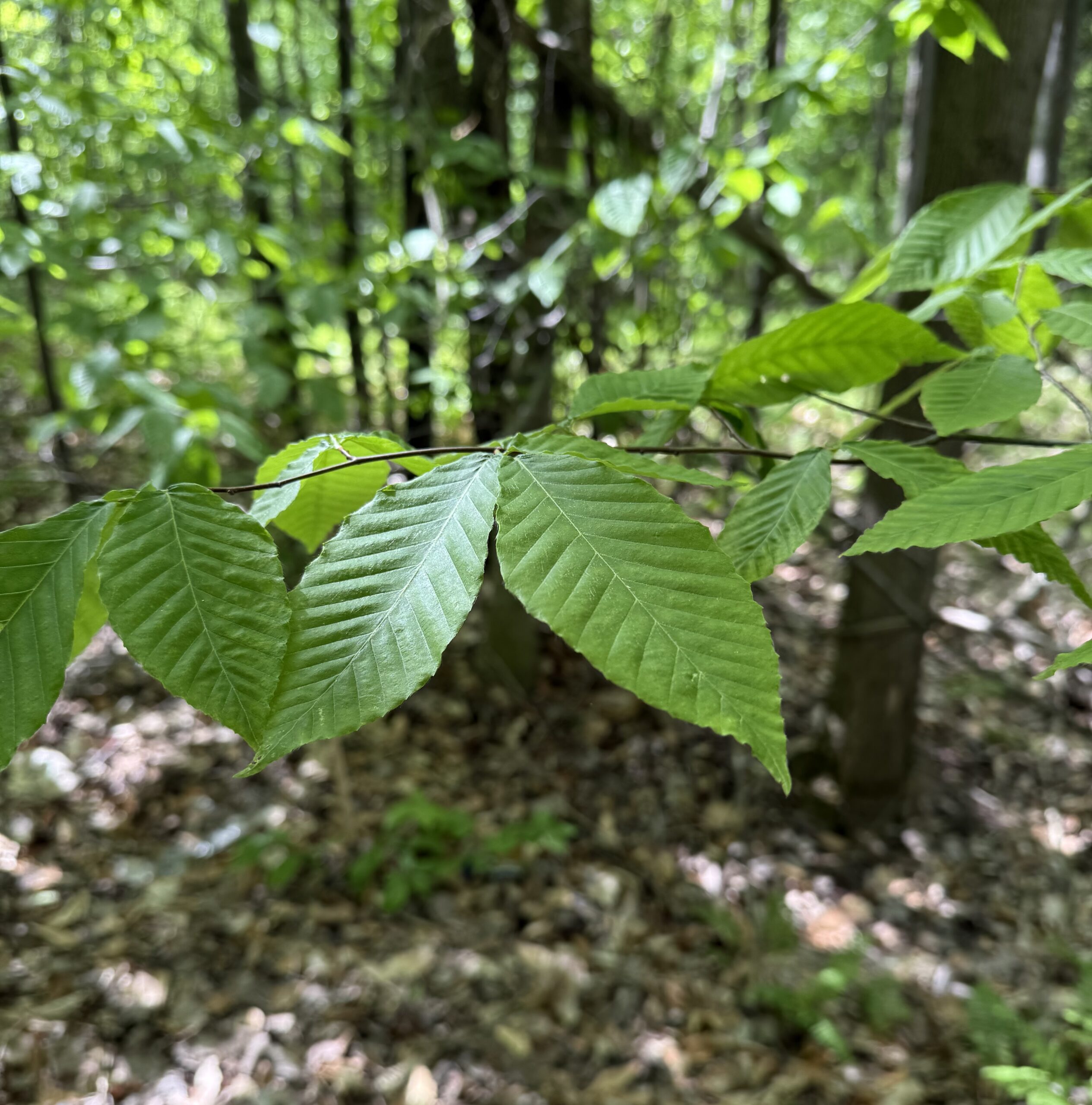
Look at the leaf you’re holding.
Take a moment with it. Feel the texture, the veins running through it, the edges, the weight of it in your hand. It came from outside, from a tree rooted in soil, fed by sun and water and air. And there is no other leaf exactly like it in the world. Not one.
And yet you know immediately that it is a leaf. It belongs. It is part of something much larger than itself.
This morning we are thinking about mystery. Not the mystery of what we don’t know, but the mystery of what we can barely hold even when it’s right in front of us. The mystery of how it all works together. The mystery of what we are to each other, and to this earth. The mystery of a God who is not a single point of light but a relationship, grace, love, friendship, a web of belonging that has been there since before the first word was spoken into the dark.
You and this leaf have been in relationship longer than you knew.
And look at the image on the screen. Our whole home. Called very good.
You are holding a piece of it in your hand.
2. The Radical Claim
In the beginning, there was chaos.
The ancient Hebrew calls it tohu wabohu (toh-hoo vah-boh-hoo), formless and void. Darkness over the deep. And into that chaos, God speaks. Not fights, not conquers, speaks. Light. Water. Land. Life. And with each act of creation, the same refrain, it is good. It is good. It is good.
Now here’s what we need to know about the world in which this story was first told. The surrounding cultures had their own creation stories. In Babylon, the world was made from violence, a god slain, the body becoming earth. Creation as conquest. And in those stories, only one person bore the image of the gods. Only one person carried divine likeness into the world.
The king.
But the writers of Genesis had another idea entirely.
Then God said, let us make humans in our image, according to our likeness.
Not the king. Not the powerful. Not one tribe or nation or people.
Every human being. Every single one. Made in the image of this creative, relational, tending God.
That us, let us make, has fascinated theologians for centuries. Who is God talking to? The divine council? God’s own creative energy in conversation with itself? The Trinity before we had a word for it? Christians would eventually call this the Trinity. But perhaps before it was a doctrine, it was simply a description of how God is. Relational, all the way down.
Perhaps the mystery is the point.
You were made for this. Connection. Creativity. Care.

3. The Mistranslation That Cost Us
And then comes the word that has caused so much trouble.
Dominion.
Let them have dominion over the fish of the sea, over the birds of the air, over every living thing.
That word has been used to justify a lot. The exploitation of land, the suffering of animals, the stripping of forests, the fouling of water. If God gave us dominion, the thinking goes, then it’s ours to use as we see fit.
But here’s what the Hebrew actually says.
The word is radah (rah-DAH). And radah is the word you use for a shepherd with a flock. Not a conqueror. Not an owner. A shepherd. Someone who knows every animal by name. Someone who goes out looking when one is lost. Someone whose whole purpose is the flourishing of what is in their care.
We were not placed above the web. We were placed into it. Made from the same earth, breathing the same air, dependent on the same water. The image of God in us is not the image of a distant ruler. It is the image of a God who tends. Who creates. Who calls things good. Who rests and invites us to rest too.
We were given something extraordinary, imagination. The capacity to see what is and envision what could be. To plan, to build, to heal, to restore. That is the gift of bearing the divine image. And like all gifts it carries responsibility.
We can use that imagination to dominate. Or we can use it to tend.
Creation is asking us to tend.
4. The Web
Look at your leaf again.
That leaf didn’t make itself. It grew from a branch, fed by a trunk, anchored by roots that reach down into soil teeming with life, bacteria, fungi, the extraordinary underground network of mycelium that connects tree to tree across an entire forest. Scientists have discovered that trees share nutrients through these networks. They warn each other of disease. They support their sick and their young.
The forest is a community.
And it has been doing this, quietly, persistently, without any instruction from us, since long before we arrived.
This is what God called good. Not isolated things. Not individual winners. A web. A community of mutual dependence and care so intricate and so vast that we are only beginning to understand it.
We live in relation. That is not a nice idea. It is the fundamental truth of life on this planet.
And Paul knew it too, writing to a fractured and arguing community in Corinth. He doesn’t lecture them about doctrine. He doesn’t outline the correct theology of the Trinity. He says, restore each other. Agree with one another. Live in peace.
And then he offers this blessing, the grace of the Lord Jesus Christ, the love of God, and the communion of the Holy Spirit be with all of you.
Grace. Love. Communion.
Not a doctrine to be argued. A relationship to be lived. A way of being in the world, with each other, with creation, with the God who made us all from the same dust and breathed the same life into every living thing.
And we already know how. We’re holding it in our hands.

5. The Commission
Let’s look at the eleven disciples. They’ve walked all the way to Galilee, to the mountain Jesus specified. And Matthew tells us something wonderfully honest. When they saw him, they worshipped him. But they doubted.
Both. At the same time. Worship and doubt, standing together on the same mountain.
And Jesus commissions them anyway.
He doesn’t wait for certainty. He doesn’t ask for a show of hands from the ones who have it all figured out. He looks at the worshippers and the doubters together and says, go. All nations. Every face. Baptize them into this mystery, this web of grace and love and friendship that has been woven into creation since the beginning.
All nations. Think about what that meant in that moment. Every culture. Every language. Every people who had their own creation stories, their own understanding of what it meant to be human.
Go and tell them, you bear the image. Every one of you. You are made for relationship, for creativity, for tending this extraordinary web of life. You are not above it. You are in it. And the God who spoke light into chaos, who rested on the seventh day, who blessed and hallowed this good earth, that God is with you.
Always. To the end of the age.
Not when you get it right. Not when you stop doubting. Not when the world is healed and the forest is restored and we have finally learned to tend instead of dominate.
Always.
That is the commission. That is the mystery. That is the grace we are made to share.
What we hold in our hands.

Taking It Further This Week
Creation care is not separate from the life of faith. It is part of our public witness. To follow Christ is to care for what God calls good: land, water, creatures, communities, and the people most affected when the earth is treated as disposable.
Diakonia means service, but not service in the abstract. It is love made practical. It is faith with hands. It is the work of tending what has been entrusted to us, repairing what has been harmed, and standing with those whose lives are most vulnerable.
So perhaps the question is not only, what do we hold in our hands?
Perhaps the question is also: how will we hold it?
With domination, or with care?
With fear, or with wonder?
With extraction, or with love?
We are made in the image of a creating, tending, relational God.
And what we hold in our hands is holy.