
Genesis 12:1–4a — The Call of Abram
Psalm 33:1–12 — VU p. 760, responsive
Matthew 9:9–13, 18–26 — Call of Matthew; a woman healed; a girl restored
Mercy is not a passing feeling or a religious performance. It is hesed: loyal, embodied, showing-up love that meets people, communities, and creation in the places of damage, exclusion, grief, and hope.
Movement 1 — The Walk
I didn’t realize how much damage there was until I went for a walk last Monday afternoon.
I was inside during the storm Sunday. I heard it. But I didn’t see what it left behind until I stepped into the forest, and felt the silence before I understood it.
On Monday, the birds were quiet. I saw two robins moving slowly along the forest floor, seemed to be searching. The ferns were flattened. Smaller plants, broken. The trees had lost their new spring leaves, especially the tender ones at the top that had just come in, stripped back in under an hour.
There was an empty feeling standing there. The kind that settles in your chest, no words for it.
I thought of my neighbours. The gardens. What people had been tending.
Hailstorms are a normal part of life here. Trees will refoliate, drawing on their reserves. The birds will find their footing. The ferns will come back. But there’s real loss in a storm like this: the forest, the gardeners, and anyone whose spring was interrupted in a moment.
The climate is shifting how often we’re asked to absorb this kind of thing. I hold that alongside the more immediate grief of a neighbourhood catching its breath.
Some days the practice is just going out and witnessing what is.

Movement 2 — Abram
Abraham was seventy-five years old when God called him. Seventy-five. Past the age when most people expect to begin something new. Unfortunately, it can be past the age when the world tends to take you seriously as someone with something left to offer.
But look around this room. You don’t let this kind of limited thinking hold you back. You know something about doing the things that you are called to do.
I’m guessing you get it when God says: go. And Abraham sets off.
Not go when you’re ready. Not go when you’ve figured out the destination. Just… go. Abraham takes it a bit further than most. He leaves what he knows: his father’s house, his kindred, the soil his feet had always known. He follows when God says, “Go to a land I will show you.”
Abraham went.
No argument. No negotiation. He simply got up and went. At seventy-five. With his elderly wife Sarah, and everything they owned, and no map.
Paul, writing to the Romans, is characteristically blunt about the situation. He notes that Abraham’s body was — and I love this — as good as dead. No diplomacy, just the plain fact: an old man, an old woman, an impossible promise. And yet… hoping against hope, he believed.
Hoping against hope. That phrase has been sitting with me this week, alongside the image of two robins moving slowly through a damaged forest, searching. Hoping against hope is not optimism. It’s not the cheerful insistence that everything will be fine. It’s something deeper: the decision to keep moving anyway, even when the evidence suggests you probably shouldn’t.
Abraham didn’t go because the odds were good. He went because he was called. And the promise he carried wasn’t just for him, or for his descendants, or for one particular nation. In you all the families of the earth shall be blessed. The circle was always wider than anyone expected.

Movement 3 — Hesed
The Psalm we read together this morning is soaked in a Hebrew word that our English translations struggle to contain. The word is hesed. (hheh-said) We usually render it as steadfast love, or lovingkindness, or mercy. But hesed is bigger than any of those.
Hesed is covenantal love, the love that shows up not because you’ve earned it, but because of who you are to each other. It’s the loyalty that goes deeper than obligation. The love that keeps returning even when there’s nothing left to offer in return.
Hesed isn’t only between people. It isn’t only between God and humanity. The psalmist says, the earth is full of the steadfast love of the Lord. The whole created order, suffused in hesed. Every fern. Every spring leaf. Every robin searching through the debris of a storm.
The damaged forest is still full of hesed. The gardens people were tending before the hail came, still held in it. The climate that is shifting, asking us to absorb more loss more often, that grief too, held in something that does not break.
I call this compassionate ecology, the practice of meeting our daily lives with care. Not trying to fix everything, not finger pointing at the largest offenders, but starting with what is in front of us. Relating. Witnessing. Tending. Love at the root. It looks a lot like hesed.
This is what mercy actually means. Not sentiment. Not pity. Not a feeling that passes. Hesed is loyal, embodied, creation-wide love that keeps showing up in the ruins and says: I am still here. Keep going.
When Jesus quotes the prophet Hosea, I desire mercy, not sacrifice, he is reaching back to this. Not religious performance. Not the right rituals done correctly by the right people. Hesed. Bone-deep, showing-up love.
Movement 4 — Matthew
Jesus is walking along and he sees a man named Matthew sitting at a tax collection station. And he says two words: Follow me.
Not a come when you’ve cleaned yourself up. Not a prove you’re worthy first. Not a let’s discuss whether you’re the right fit for this community. Just: follow me. And Matthew got up and followed him.
Now, we need to understand what Matthew was. He was a Jewish tax collector working for the Roman occupation. Which meant he was working for the people who had colonized his own community. He was almost certainly skimming from his neighbours, that was how the system worked, that was how you made your living in that role. He was despised. Not just disliked but despised. A collaborator. A traitor. Someone you crossed the street to avoid.
And Jesus sits down to dinner with him. And not just with him, with many tax collectors and sinners. A whole table of wrong people, eating together.
The Pharisees are scandalized. Why does your teacher eat with tax collectors and sinners? And Jesus answers with the line that becomes our theme today: I desire mercy, not sacrifice. I have not come to call the righteous but sinners.
He isn’t coming for the ones who have it figured out. He’s going to the margins. He’s sitting down at the table where nobody else will sit. That is what hesed looks like in practice, not the performance of religion, but showing up where the need is.
And then, two healings, back to back, that I want us to sit with.
A leader comes to Jesus, desperate. His daughter has just died. And on the way to the leader’s house, a woman pushes through the crowd. She has been suffering from a hemorrhage for twelve years. Twelve years of being considered ritually unclean. Twelve years of not being allowed to touch anyone, or be touched. Twelve years of existing at the margins of her own community.
She doesn’t ask permission. She doesn’t announce herself. She just reaches out and touches the fringe of his cloak. If I only touch his cloak, I will be made well.
Hoping against hope.
And Jesus stops. In the middle of a crowd, on the way to an urgent errand, he stops. He turns. He sees her, really sees her, which may have been the first time in twelve years anyone had. And he says: Take heart, daughter. Your faith has made you well.
Daughter. Not, you, woman. Not, the unclean one. Daughter. He behaves like a father who cares about his daughter, beyond the rules of who is unclean and untouchable, but with the care of a good father.
Then he goes to the girl. The crowd is already mourning, already laughing at the idea that anything can be done. He puts them outside, goes in, takes her by the hand. And she gets up.
Two women. Both written off. Both restored. Both, if we’re paying attention, doing the hoping against hope that Abraham did, that the psalmist did, that Matthew did when he stood up from that tax booth and walked away from everything he knew.
This is the pattern. This is what hesed looks like when it moves through a human life.

This pattern didn’t end in first century Palestine.
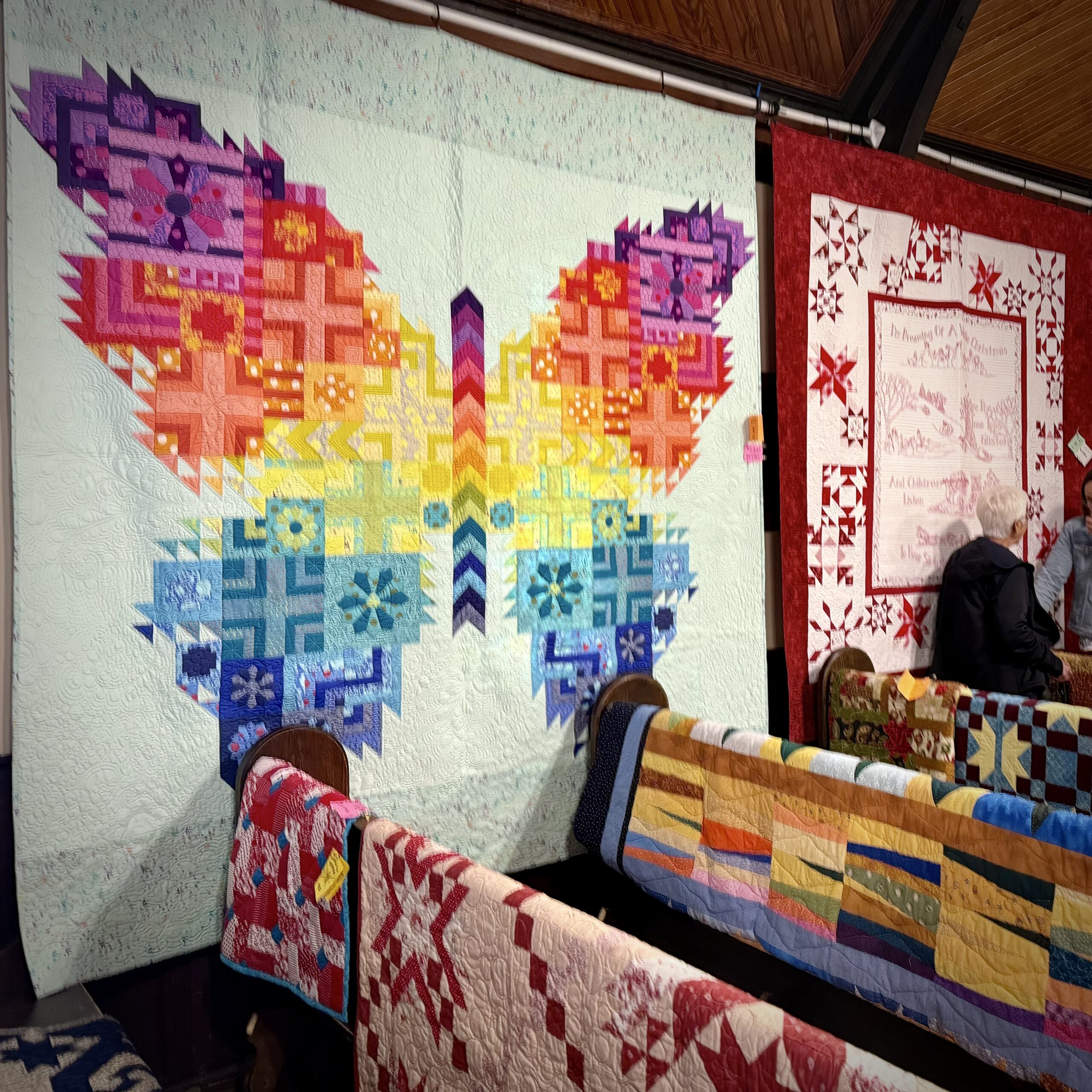
I think of the Quilting Posse of Stanbridge East, these women work together and make quilts for residential school survivors. Their inspired, beautiful work passed along with the hope that they create threads of care. Nobody asked them to do it. They felt the need to reach out and showed up. Hesed.
And here at Emmanuel, when a child is baptized, a quilt is made for them. A handmade quilt, given to a new little life, welcomed into this community. I don’t know many congregations that could offer something like that. That is not a small thing. That is a community saying: you matter, you are known, you are held. Hesed.
I think of our own Welcome Project here at Emmanuel, the people who give their time to receive newcomers, to help strangers with basic needs for the home and body, to say: you belong here, this community cares. Hesed.
And I think of something humming along in the background each week. The moments when you think of a friend who is sick, or recovering, or living with limited mobility and you pick up the phone, or you take time to visit. The card you write and send to someone whose journey looks nothing like yours, but you took the time to remember them. The visit you make when it would have been easier not to.
Nobody sees those acts. They don’t make the newsletter. But they are hesed, loyal, showing-up love, flowing outward from one person to another, one hand reaching toward the fringe of a cloak, hoping it will be enough.
It is enough. It is always enough.
This kindness spreads through all our community. It always does.
Movement 5 — The Forest
To hope against hope.
Abraham went at seventy-five with no map and a promise too large to comprehend. Matthew stood up from a tax booth and walked away from everything he knew. A woman pushed through a crowd and reached for the fringe of a cloak. A girl woke up and stood on her own two feet.
And women work together and make quilts. And somewhere in this congregation, someone wrote a card, made a visit, shared some food. And somewhere in a damaged forest, two robins moved slowly through the debris, still searching, rebuilding, still going.
That is the practice. That is the call.
I desire mercy, not sacrifice.
I invite you: go and learn what this means for you.

Taking It Further
Mercy is never only an idea. Mercy becomes a quilt, a meal, a card, a visit, a welcome bag, a phone call, a hand extended toward someone who has been pushed to the edge.
Diakonia is love made practical. It is the church learning, again and again, that God’s steadfast love is not meant to remain inside our words or our worship. It moves outward. It sits at tables where others refuse to sit. It notices who has been left outside. It tends the damaged places, in people and in creation.
So when Jesus says, “I desire mercy, not sacrifice,” he is not dismissing faithfulness. He is showing us what faithfulness looks like.
It looks like showing up.
For the neighbour.
For the stranger.
For the wounded.
For the earth after the storm.
This is the practice.
This is the call.